

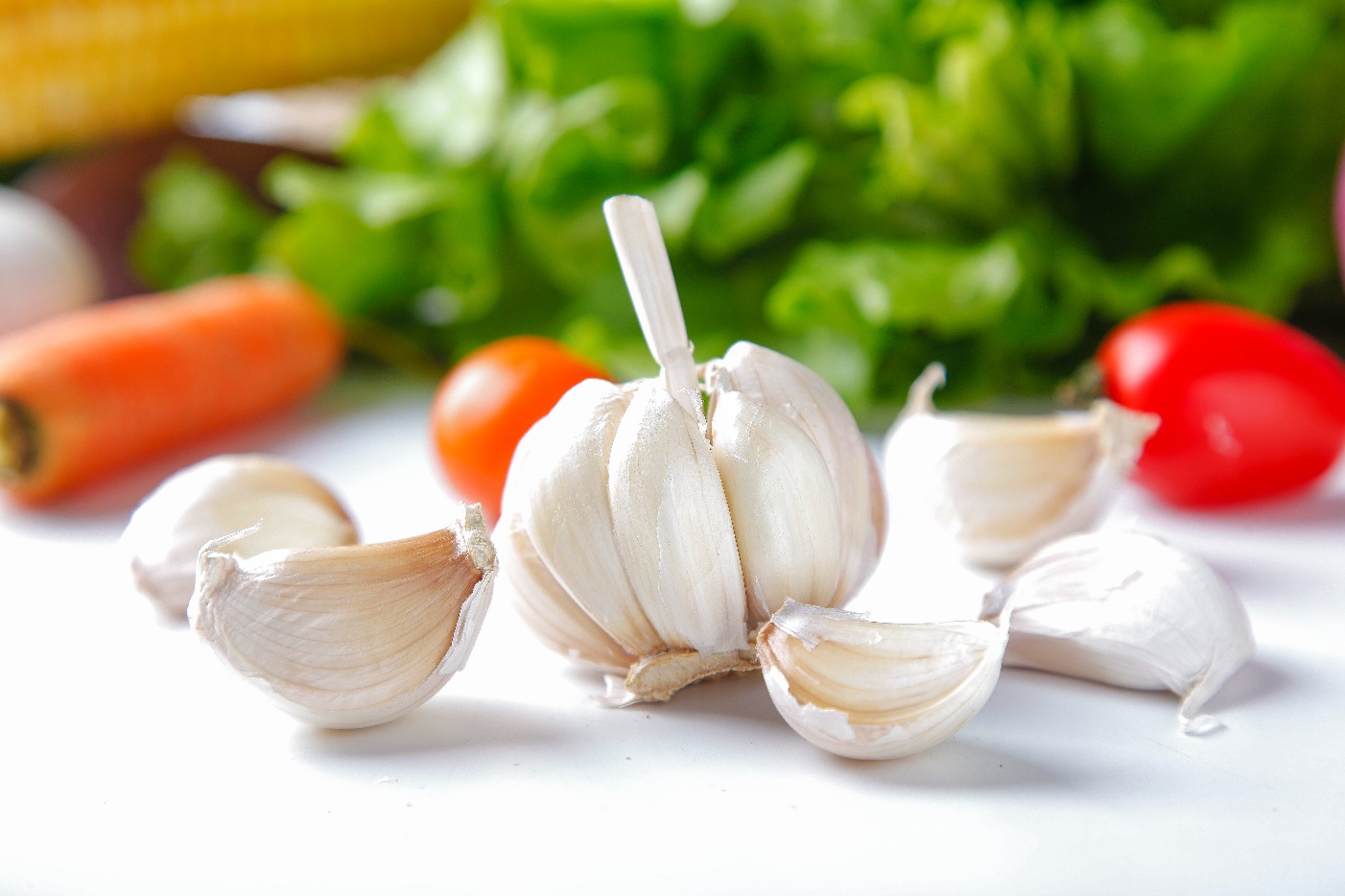
Garlic is the bulb of Allium sativum L., a plant in the lily family, native to West and Central Asia. Currently, China's garlic production accounts for over 70% of the global total.
According to the color of the bulb skin, garlic can be divided into two types: purple skinned garlic and white skinned garlic. Purple skinned garlic has few large cloves and a strong spicy taste; White garlic comes in two types: big cloves and small cloves, with a milder spicy taste.
Chemical and Nutritional Components of Garlic
Garlic is rich in nutrients, containing trace elements such as thiamine, riboflavin, niacin, allicin, citral, selenium, and germanium. It also contains about 0.2% volatile oil, with allicin being the main component of the oil. Allicin has antibacterial properties and is produced by the hydrolysis of alliin in garlic by alliinase.
Garlic also contains some special physiologically active substances, such as superoxide dismutase, which make garlic have physiological effects such as antibacterial and anti-inflammatory, anti-cancer, treatment and prevention of cardiovascular diseases, improvement of immune function of somatic cells, and protection of the liver. Garlic is known as a "natural antibiotic" and is recommended by Time magazine as one of the top ten best nutritious foods.
Preparation method of garlic extract
1. Garlic extract
Garlic extract refers to the crude extract of garlic that has been crushed and extracted using organic solvents or water. The main extract of garlic is allicin, which is mainly composed of diallyl sulfide, an extremely unstable organic sulfide. After 20 hours at room temperature (20 ℃), it is almost completely decomposed, and the decomposition rate increases when heated.
Therefore, the extraction and preservation of allicin is relatively difficult, and it is one of the important components in garlic extract that plays an antimicrobial role.
2. Preparation of Garlic Extract
At present, the main methods for extracting allicin include steam distillation, solvent extraction, and supercritical CO2 extraction.
Among them, steam distillation is one of the commonly used methods due to its low cost, simple equipment, and good stability; Supercritical CO2 extraction method is safe, reliable, easy to operate, and widely used in fields such as food and medicine. Supercritical CO2 fluid extraction technology is a new type of extraction and separation technology, which has the advantages of no solvent residue and good retention of effective ingredients in raw materials. It is widely used in the food industry for extracting and preparing various high value-added foods.
Using garlic as raw material, a combination of ethanol leaching and supercritical CO2 purification is used to extract allicin, which can achieve continuous extraction and purification of allicin by supercritical CO2.
Application of Garlic and Its Extracts in Food Processing
1. Application in food preservation
Garlic has antibacterial ingredients and enhances immunity. Chen Hongsheng et al. applied the anti-oxidant raw material in garlic to the preservation process of chilled meat. By measuring its microbial and physicochemical indicators, and combining sensory evaluation, they determined the preservation and antioxidant effects of garlic extracts at different concentrations on chilled meat.
The experimental results showed that when the concentration of garlic extract was 2%, it had good antibacterial and antioxidant effects on cooled meat, and had little effect on the color of the meat. Li Tingting et al. conducted a study on the effect of garlic extract on the quality of refrigerated vegetable fish balls. The experiment involved adding garlic extract of different concentrations to vegetable fish balls and comparing the changes in sensory, microbiological, and chemical indicators of each experimental group under 4 ℃ refrigeration conditions.
The results showed that the best preservation effect was achieved when the amount of garlic extract added was 200 mg/kg, which could extend the shelf life of fish balls by 7-8 days; After comparing the total number of bacteria, pH value, TBA, TVB-N and other quality indicators, it was found that garlic extract can effectively inhibit bacterial growth and slow down the oxidation and deterioration of proteins, fats and other substances during the refrigeration and preservation process of fish balls.
Zhao Mei et al. studied the effect of different concentrations of garlic extract on the preservation of shiitake mushrooms using shiitake mushrooms as raw materials. The results showed that different concentrations of garlic extract could effectively inhibit the respiratory intensity, cell membrane permeability, weight loss rate, and decay index of shiitake mushrooms. They could also reduce the changes in the appearance quality of shiitake mushrooms and delay their decay. Among them, the garlic extract with a solid-liquid ratio (g/mL) of 1:5 had the best preservation effect on shiitake mushrooms.
Garlic extract not only has antibacterial and preservative effects, but also can regulate the physiological metabolism of fruits and vegetables, maintaining their good quality. Feng Deming and others applied allicin alcohol extract to the preservation of soy products, achieving good results.
2. Create a unique aroma
Research has found that garlic, after being stir fried in oil at 150-160 ℃, contains sulfide compounds that can form a unique taste and aroma. Cooking dishes such as garlic flavored broccoli, garlic flavored pork ribs, garlic flavored fish and shrimp take advantage of this characteristic.
3. Sterilization and disinfection effects in cold dishes
The allicin and active ingredient Ahonen contained in garlic, as well as sulfides in garlic oil, can effectively inhibit the activity of cellulase or lipid metabolism by reacting with cysteine, and have inhibitory or bactericidal effects on various pathogenic fungi and bacteria.
The antibacterial components allicin and alliin in garlic have strong bactericidal effects on pathogenic intestinal bacteria such as Shigella and Salmonella, so it is widely used in cold dish production. However, the amount of garlic used should be based on the premise of not damaging the aroma and taste of the food.
4. Application in compound flavor profiles
Research has found that the spicy taste of allicin, when combined with soy sauce, vinegar, scallions, ginger, and other ingredients, can form various complex flavors such as fish aroma and strange taste, achieving good results.
Garlic mixed with pickled chili, soy sauce, salt, monosodium glutamate, sugar, ginger, etc., can form a complex flavor of fish, with a combination of salty, sweet, sour, and spicy flavors, and a rich aroma of scallions, ginger, and garlic.
5. Mix with other seasonings to make various sauces
Qiao Aixia and others studied the optimal process parameters for extracting allicin using ethanol extraction method. Through single factor experiments and orthogonal experiments, a mathematical model was established with allicin extraction rate as the target value and enzymatic hydrolysis temperature, enzymatic hydrolysis time, extraction temperature, and extraction time as factors, providing a scientific basis for the full development and utilization of allicin.
At present, research on garlic in food processing mainly focuses on the preservation of food additives and seasoning techniques for dishes, and research on deep processing and utilization is still far from sufficient. The effective and safe natural active ingredients in garlic can be effectively developed and utilized, which has a profound impact on the research and development of garlic health care material, food and dishes.