

In the current social context where health awareness is increasingly enhanced, people's attention to natural ingredients with health benefits is constantly increasing. β -glucan, as an active component widely present in nature, exhibits diverse physiological activities and immunomodulatory capabilities due to its different sources. β -glucan originates from the inner layer of yeast cell walls and is a pure natural and highly active nutrient component. In addition, yeast β -glucan is odorless and tasteless, and insoluble in water, ethanol, acetone and other organic solvents. It can be added to various foods such as dairy products, functional beverages, baked goods and candies.
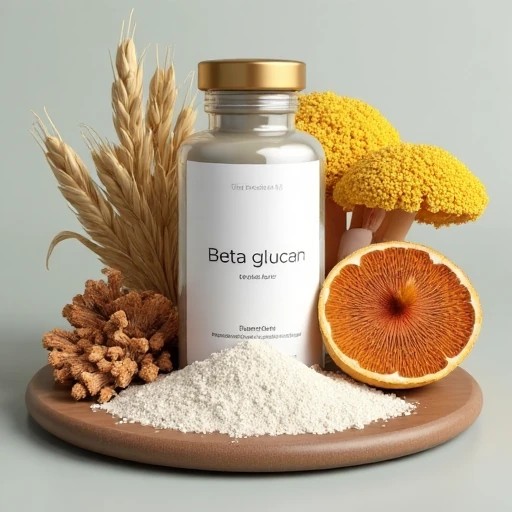
In recent years, with the development of the yeast fermentation industry, yeast β -glucan has become a research hotspot. Yeast β -glucan has multiple physiological and biochemical functions such as enhancing the body's immunity, lowering blood sugar and cholesterol, and regulating intestinal health. In addition, yeast β -glucan, as a substance with significant functions in immune regulation and prebiotics, has also received extensive research and attention. Its application in the food field has been continuously expanded with the in-depth understanding of its functional characteristics.
The immune function of yeast β -glucan
1.Activate macrophages
Oral yeast β -glucan is different from other food components. It is not hydrolyzed by acids or enzymes in the stomach and intestines but passes directly through the small intestine. Macrophages on the small intestinal mucus cells absorb β -glucan through β -glucan receptors and then immediately activate these cells. β-1, 3-D-glucan works by stimulating macrophages, a type of white blood cell that can play a wide role in protecting and enhancing the immune system, protecting the body from potentially harmful substances to health. Macrophages are a major type of cell involved in non-specific immunity. They can phagocytize foreign particles and destroy them. Moreover, macrophages can also provide signals to other immune cells such as B cells and T cells, enabling them to move towards the site of infection.
2. Enhance the ability to resist infection
Scientific research has proved that yeast β -glucan contains antibacterial ingredients and can significantly enhance the efficacy of antibiotics. When it is used in combination with antibiotics, its stimulating effect on macrophages can enhance the therapeutic effect of the drug. While β-1, 3-D-glucan enhances the body's own antibacterial ability, antibiotics can inhibit the invasion of bacteria and improve the body's disease resistance.
3. Enhance the overall immune level
Dr. Roff Sinkaghny, the Nobel Prize winner in Medicine in 1996, pointed out that the major histocompatibility complexes (MHC) of both polysaccharide and protein categories can promote immune cells in the body to recognize antigens, react and produce antibodies, and yeast β -glucan is one of the outstanding ones among them. In terms of children's immunity, for instance, the immune element glucan drops launched by VITAGrow Vitagrow, whose main component is yeast β -glucan, can continuously activate children's immune systems to resist disease invasion. Therefore, it has positive effects in preventing respiratory tract infections, regulating allergic constitutions, and improving intestinal health.
The prebiotic function of yeast β -glucan
1. Improved Digestion Ingredients
Although the current research on the function of yeast β -glucan prebiotics is relatively less than that on immune function, existing studies have shown that it can provide nutrient substrates for beneficial intestinal bacteria, promote the growth and reproduction of beneficial bacteria, and thereby help regulate the balance of intestinal flora. For instance, some beneficial intestinal bacteria can utilize yeast β -glucan for fermentation to produce metabolic products such as short-chain fatty acids that are beneficial to intestinal health. Studies have found that β -glucan can reduce the number of harmful bacteria in the intestinal tract by adsorbing pathogenic bacteria such as Salmonella and Escherichia coli in the intestine. It can promote the proliferation of Gram-positive beneficial active bacteria in the intestinal tract and inhibit the proliferation of Gram-negative saprophytic bacteria.
2. Enhance intestinal barrier function
The integrity of intestinal barrier function is of vital importance to human health. Yeast β -glucan may reduce the passage of harmful substances, prevent the translocation of toxins and bacteria in the intestine, and maintain the stability of the intestinal environment by stimulating the proliferation and differentiation of intestinal epithelial cells, enhancing the thickness and tightness of the intestinal mucosal layer.
Other functions of yeast β -glucan
In addition to the immune function and prebiotic function, yeast β -glucan also has the function of reducing cholesterol. Many years ago, scientists discovered that beta-glucan could reduce the rate at which the stomach and intestines absorb fatty acids and lower the synthesis of cholesterol in the human body, thereby helping to lower total cholesterol and low-density lipoprotein cholesterol.
In addition, β -glucan can effectively eliminate free radicals in the body, which helps protect macrophages from the attack of free radicals both during and after radiation exposure, enabling these macrophages to continue to function normally.
Yeast β -glucan has significant immune and prebiotic functions, and its application as food additives in the food field is also becoming increasingly widespread. As research deepens, our understanding of its functional mechanism will become more thorough, which will further promote its application and development in more types of food to meet consumers' demands for healthy and functional foods. Meanwhile, it can be used as a health care raw material. In future research, it is necessary to further explore aspects such as the optimal intake of yeast β -glucan in different populations and its synergistic effect with other components, so as to better exert its potential in health promotion and disease prevention.