

What is itaconic acid?
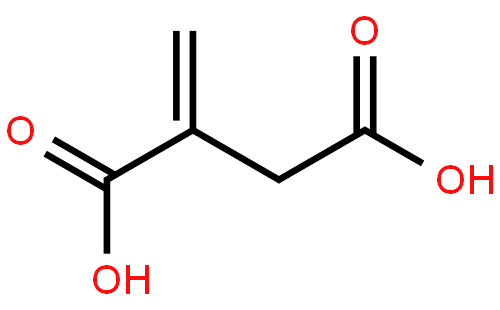
Itaconic acid, chemically known as methylene succinic acid or methylene succinic acid, has a chemical formula of C5H6O4. It is an unsaturated dibasic organic acid, with the appearance of a white crystalline powder and a strong pungent odor. Itaconic acid is soluble in water, acetone and ethanol, and slightly soluble in carbon disulfide, chloroform, petroleum ether and benzene. Because it contains two active carboxyl groups and a double bond in its molecule, itaconic acid has the characteristics of active chemical properties and easy polymerization, so it is widely used in the chemical industry.
What are the applications of itaconic acid in the cosmetics industry?
Breakthrough applications in the field of hair care
In recent years, hair dyeing, perming, bleaching and other hairdressing methods have become daily routines, but the problem of hair damage caused by chemical treatments has become increasingly prominent, such as hair scale shedding, hair core hollowing, and easy breakage. How to repair damaged hair from the root has become a common focus of attention for consumers and brands.
A patent recently disclosed by PROYA shows that itaconic acid has a significant effect in repairing damaged hair. The unsaturated double bonds in itaconic acid molecules can be combined with free thiol groups generated by dyeing and perming in the hair through the Michael addition reaction to reconnect the broken disulfide bonds. This way of "stitching" the damage at the chemical bond level not only fills the limitation of traditional hair care ingredients that only rely on surface film formation or hydrogen bonding, but also can substantially repair the hair core structure.
Research data shows that when the concentration of itaconic acid is 2% and the pH value is controlled at 2.15-2.49, the fracture force repair effect of perm-damaged hair is the best, with an increase of 21%. In addition, the PROYA team has also developed formulas suitable for different types of damage, such as combining it with sodium hydroxide for perm damage in an alkaline environment, or combining it with arginine for oxidative damage caused by bleaching.

Anti-inflammatory and antifungal raw materials
Itaconic acid not only has the effect of repairing hair, but is also widely used in scalp care products due to its anti-inflammatory and antifungal properties. It can effectively relieve scalp inflammation, reduce dandruff problems, and help maintain a healthy scalp
Anti-hair loss potential
Itaconic acid also shows great potential in the field of anti-hair loss. The research team of the Czech Academy of Sciences has developed a series of prodrugs based on itaconic acid derivatives for the treatment of the autoimmune disease alopecia areata. These compounds can effectively relieve inflammation, protect hair follicles, and accelerate the growth of new hair through oral or topical ointment. At present, the relevant drugs have entered the phase 1 clinical trial stage and are expected to become a new option for the treatment of hair loss in the future.
What is the market prospect of itaconic acid?
According to a report by market research organization Euromonitor, the global hair care market is growing at an average annual rate of 5%, among which the demand for "dyeing and perming repair" and "strengthening the hair core" continues to lead. As a biological fermentation product, itaconic acid not only meets consumers' preference for natural ingredients, but also can repair hair damage at the molecular level, accurately hitting the two major pain points of current hair care products:
In-depth repair of the hair core: Traditional hair care ingredients mostly stay on the surface of the hair scales, while itaconic acid can penetrate into the hair core, repair broken disulfide bonds, and achieve substantial repair.
Natural and safe: As a biological fermentation product, itaconic acid is in sharp contrast to consumers' concerns about "chemical repair" and is more likely to gain market recognition.
Although itaconic acid has shown great application potential in the fields of cosmetics and medicine, its commercialization still faces some challenges: when compounding with other active ingredients, the stability of itaconic acid needs to be further verified.