

Goji berry
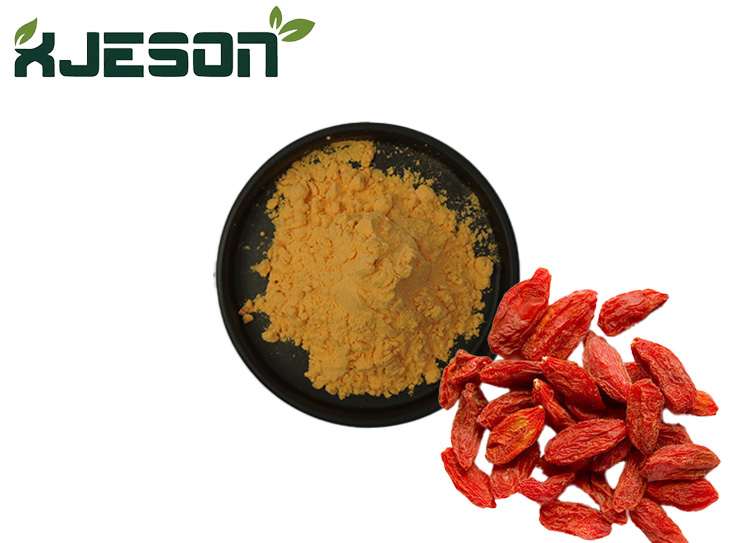
Goji berry belongs to the genus Lycium of the Solanaceae family. It is the mature fruit of the plant Lycium barbarum of the Solanaceae family. It is a precious tonic Chinese medicine. There are about 80 species of goji berries in the world. The quality of goji berries in Ningxia is the best in my country. Chinese medicine believes that goji berries are sweet and moist, and have the effects of nourishing the kidney, nourishing yin, nourishing essence, nourishing blood, nourishing the liver, improving eyesight, and invigorating qi. The Compendium of Materia Medica describes goji berries as "nourishing the kidneys and moistening the lungs, generating essence and invigorating qi, and improving eyesight."
Modern scientific research has confirmed the above statement. The chemical composition of goji berries mainly includes sugars, amino acids, trace elements, carotene, vitamins A, B1, B2, C and other essential nutrients for healthy eyes.
1.1 Vitamin A
Wolfberry is rich in vitamin A and carotene. Carotene can be converted into vitamin A in the body. Vitamin A, also known as retinol or anti-dry eye factor, is a component of rhodopsin in visual cells that sense weak light. It plays an important role in maintaining normal visual function, preventing night blindness and vision loss, and helping to treat a variety of eye diseases.
1.2 Lutein
Wolfberry is rich in zeaxanthin. Zeaxanthin is an oxygen-containing natural carotenoid. It is an isomer with lutein. Zeaxanthin is an important component that can prevent ultraviolet rays from damaging the optic nerve of the eye. However, the human body cannot produce zeaxanthin and can only be obtained from food. Among them, taking wolfberry is an important guarantee for supplementing zeaxanthin in the human body.
1.3 Taurine
Goji berries contain 19 kinds of amino acids, including 8 essential amino acids, with a total amount of 9.14%. It is also found to contain aminoethanesulfonic acid, or taurine, and is the only plant reported to contain taurine, with a content of 0.205%-0.689%. Taurine is a simple sulfur-containing amino acid that exists in a free form in the retina but does not participate in protein synthesis. In vivo, a decrease in taurine concentration in the retina will lead to the destruction of the photoreceptor structure, accompanied by severe visual dysfunction and abnormal electroretinogram. Taurine at physiological levels in the retina plays an important role in maintaining the structure and function of visual cells.
Ginkgo biloba
Ginkgo biloba is a plant leaf with high medicinal value. Plant extract Ginkgo biloba extract mainly contains flavonoids, terpene lactones, polyisoprenols, organic acids, ginkgolic acids, alkylphenols, alkylphenolic acids, ginkgolic acid, etc. It is also rich in vitamin C, vitamin E, carotene, and mineral elements such as calcium, phosphorus, boron, and selenium, which are higher than general fruits, vegetables, and edible plant materials.
According to traditional Chinese medicine theory, ginkgo biloba is sweet, bitter, astringent, and flat in nature, and has the effects of astringing the lungs and relieving asthma, promoting blood circulation and removing blood stasis. With further understanding of its pharmacological effects, it is found that ginkgo biloba has a good effect on relieving visual fatigue. Studies have shown that ginkgo biloba has the following effects in improving patients' vision:

2.1 Inhibition of platelet aggregation
The lactone substances contained in ginkgo biloba can inhibit a substance called platelet activation factor, so ginkgo biloba can reduce blood viscosity, inhibit platelet aggregation, increase arteriolar elasticity, increase vascular permeability, and thus increase retinal transparency.
Dilate blood vessels. Ginkgo biloba can play a vasodilating role by increasing the calcium ion concentration of vascular endothelial cells, increasing the activity of nitric oxide synthase, and then increasing the production of nitric oxide. It can also play a vasodilating role by increasing PGI2 and reducing TXA2. Therefore, ginkgo biloba can dilate microvessels in the retina, reduce retinal vascular tension, inhibit microthrombosis, and thus improve the patient's visual function.
2.2 Optic nerve protection
Ginkgo biloba can increase the blood supply to the choroid and retina, thereby improving visual function. The medical community generally believes that when the eyes are performing normal physiological activities, they need to constantly overcome the resistance of fluctuating intraocular pressure to regulate the blood flow rate of the optic nerve.
Ginkgo biloba can improve central and peripheral blood flow, reset vascular spasms, and reduce cell apoptosis; Ginkgo biloba has the effect of inhibiting glutamate toxicity, thereby slowing down ganglion cell apoptosis; the natural antioxidant activity of ginkgo biloba can effectively protect the function of mitochondria, and play a protective role against tissue and cell damage caused by different reasons, thereby protecting the integrity of mitochondrial structure and function. Ginkgo biloba protects retinal ganglion cells by changing ocular microcirculation, protecting visual neurons and mitochondria.
In summary, wolfberry extract and ginkgo leaf extract are rich in various nutrients necessary for the eyes. They can be used as health care material to have excellent effects in relieving visual fatigue. Therefore, the combined use of wolfberry and ginkgo leaf in fatigue relief products will achieve good results.