

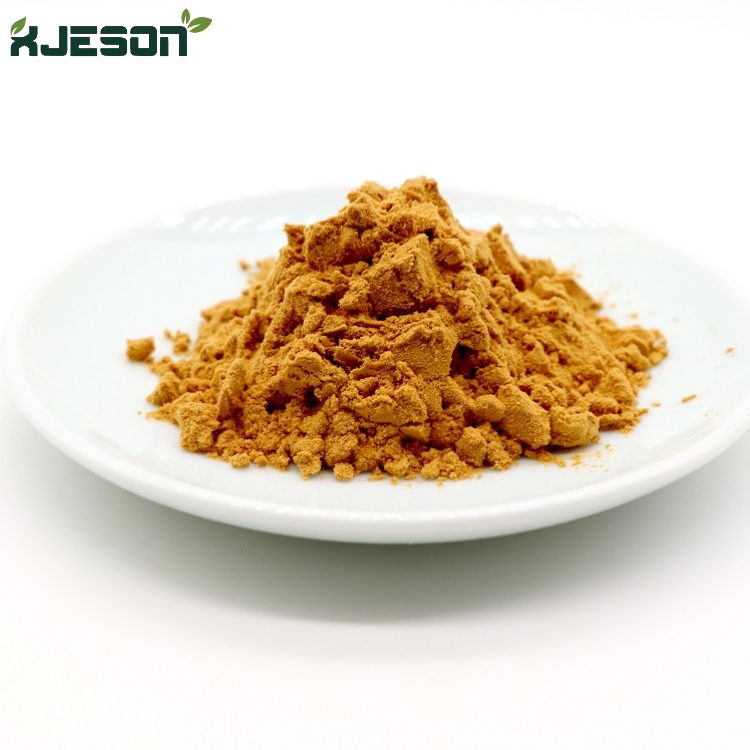
Chitin, chitosan, and chitosan oligosaccharides are all used as food additives, but they are different in their specific uses.
Chitin (thickener, stabilizer).
Chitin is an animal extract, was discovered by French scholar Braquenot in 1811 and extracted from crustacean shells by Ogier in 1823. It is an animal extract named CHITIN, which is translated as chitin.
Sensory characteristics: off-white flakes or powder
Chitin is the first practical product and the first "functional food" approved in Japan. However, chitin is insoluble in water, alkali, general acid and organic solvents, and is only soluble in some concentrated acids. It is partially decomposed by the action of chitinase and lysozyme in the human gastrointestinal tract. Therefore, its absorption rate is extremely low, the dosage is large, and the reaction to taking is as high as more than 70%. Chemical treatment of chitin, removing the acetyl group, becomes chitosan.
Chitosan, also known as deacetylated chitosan (thickener, coating agent)
chitosan (chitosan), chemical name is polyglucosamine (1-4)-2-amino-B-D glucose, which is obtained by deacetylation of chitin (chitin). Generally speaking, chitosan can be called chitosan if more than 55% of the N-acetyl group is removed.
Sensory characteristics: white or slightly yellow flakes or powder
Chitosan can be dissolved in dilute acid, which is a step forward from chitin. However, both chitin and chitosan are large molecules with molecular weights ranging from hundreds of thousands to millions, and are not soluble in water.
Chitosan is obtained by deacetylation of chitin, and then further degraded to become chitosan oligosaccharides.
Chitosan oligosaccharides (new food raw materials) use chitosan as a raw material to degrade chitosan into small molecules, which is chitosan oligosaccharides. Its molecular weight is about 3000Da and its degree of polymerization is 2-20. Therefore, chitosan oligosaccharide itself is a mixture, which contains monosaccharides all the way to chitosan decaose, and each type of sugar has its own functionality.
Sensory characteristics: light yellow solid powder
Chitosan oligosaccharide can be directly dissolved in water, with a water solubility of more than 99%, a human absorption rate of 99.88%, and a greatly reduced dosage and reaction after taking. It is more significant than chitosan in directly participating in the physiological regulation of the human body, and has many functions superior to high molecular weight chitosan.
Chitosan must be degraded by the human body's biological enzymes to obtain some small molecular weight chitosan oligosaccharides. Under normal circumstances, the degradation ratio is 1-5%, and the remaining 95% of the polysaccharides are eliminated through the human intestinal system, so chitosan oligosaccharides increase the body's immune function more strongly than chitosan.
Specific differences between chitosan oligosaccharides and chitosan
1. Molecular weight difference: chitosan oligosaccharides are a new product obtained by treating chitosan with special bio-enzyme technology, with a molecular weight below 3000Da; chitosan is a product of partial deacetylation of chitin, with a molecular weight of 500,000-1 million.
2. Solubility difference: chitosan oligosaccharides have a low molecular weight and can be completely soluble in water; chitosan can only be soluble in dilute acid solution. The enhancement of water solubility is an important factor affecting some physiological activities of chitosan oligosaccharides. Only when it is soluble in water can it be absorbed and utilized by organisms and show biological activity, so chitosan oligosaccharides are more easily absorbed by humans, animals and plants.
3. Functional difference: chitosan oligosaccharides with a molecular weight below 2000 show unique physiological activities and functions: improve the function of macrophages; inhibit the growth and metastasis of tumor cells; reduce cholesterol and blood lipids; antibacterial, antibacterial and significant moisturizing and hygroscopicity. Chitosan oligosaccharides with a molecular weight below 5000 have the ability to hinder the growth and reproduction of pathogens, promote protein synthesis, activate plant cells, and thus promote rapid growth of plants.
The numerous functions of chitosan oligosaccharide indicate that it is an alternative in the oligosaccharide family. Chitosan oligosaccharide is the only alkaline and positively charged oligosaccharide found among the oligosaccharides. This characteristic also determines that it is the only oligosaccharide that can be absorbed by the intestines and enter the blood circulation. The blood circulation to all parts of the body is the basis for its many other biological functions.
The premise for chitosan oligosaccharide to be absorbed by the intestines is that it is not digested by digestive enzymes. Chitosan oligosaccharide is a polymer formed by glucosamine connected by β-1,4-glycosidic bonds, and the digestive enzymes in the human gastrointestinal tract mainly act on α-1,4-glycosidic bonds, so chitosan oligosaccharide can maintain structural integrity in the gastrointestinal tract.