

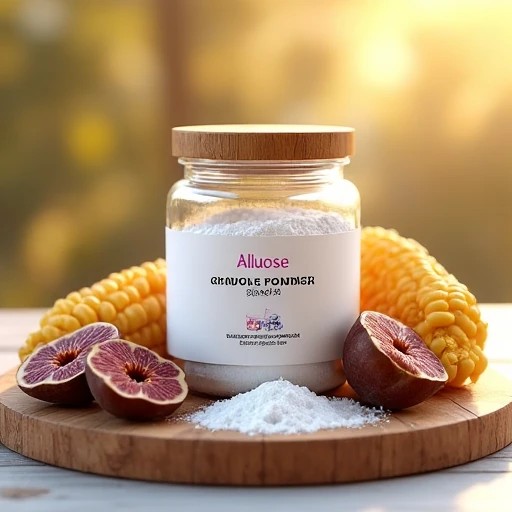
Allulose is not a new thing. Countries such as the United States, Japan, and South Korea have long recognized its status as a healthy sweetener. Today, it has ushered in the dawn of policy in the Chinese market, and its development prospects have attracted much attention.
The "scientific hard power" of allulose is an important reason for its attention. It is naturally present in foods such as figs and kiwis, and its sweetness is about 70% of sucrose, but its calories are extremely low, only 0.4kcal/g (sucrose is 4kcal/g), and it is almost not metabolized by the human body, and will not cause blood sugar fluctuations. The GI value is close to 0, which is very friendly to diabetic patients. Unlike sugar alcohol sweeteners, allulose does not cause gastrointestinal discomfort such as diarrhea. It is highly stable and has good high temperature and acid resistance. It can be widely used as food additives in baking, beverages and other fields. It can also participate in the Maillard reaction to add attractive color to food.
From a policy perspective, the global approval of allulose is accelerating. In 2011, the US FDA listed it as a "generally recognized as safe (GRAS)" substance, and in 2019 it was allowed to be labeled as "0 sugar"; Japan, Canada, Australia, New Zealand and other countries have also approved its use in food. Although the EU has not yet approved it, the relevant approval work is progressing. In China, although the approval of allulose has gone through twists and turns, the key enzyme preparations have been approved. Once approved, domestic companies will usher in a market opportunity of hundreds of billions.
In terms of market potential, allulose is even more impressive. According to Baijian Fanglue's forecast, the global allulose market size will soar from 1.27 billion yuan in 2024 to 6.96 billion yuan in 2030, with an annual compound growth rate of 32.78%. The Chinese market accounts for more than 80%, making it the core battlefield of the global allulose market. In the big health food and beverage industry, allulose has begun to "penetrate" widely. In the field of sugar-free beverages, it can perfectly replace sucrose and improve the taste of beverages with its excellent solubility and stability. In carbonated beverages, it can reduce astringency and enhance the sense of bubbles; in coffee and soy milk products, it can neutralize bitterness and mask the beany smell; in alcoholic beverages, it can balance alcohol stimulation and reduce calories. When combined with erythritol, stevia, etc., it can also improve the bitter aftertaste of traditional sugar-free beverages. For example, Liquid I.V. electrolyte powder under Unilever uses allulose as the core sweetener and has gained a good reputation. In the baked food industry, the high temperature resistance of allulose makes it the key to "reducing sugar without reducing taste". It can participate in the Maillard reaction like sucrose, giving bread and cakes a golden color and soft texture, while reducing calories by more than 30%, solving the problem of poor taste of low-sugar baked foods. Moreover, its water retention and anti-browning properties can also improve the quality of hard candies and soft candies.
In the field of functional foods, allulose is also very useful. In meal replacement and protein bar products, the plant protein bars launched by the American brand BrainMD use allulose to replace traditional sugars to meet the low-calorie needs of fitness people; in terms of intestinal health products, allulose can promote the proliferation of probiotics and is expected to be used in prebiotic drinks and dietary supplements in the future; in Japan, allulose has been used in weight loss functional foods to assist in weight management. Adding allulose to dairy products and ice cream can reduce calories while maintaining the original taste, providing consumers with a healthier choice.
The development of allulose will also reshape the food industry chain. Looking to the future, allulose has a broad space for "breaking the circle". In the pharmaceutical raw materials, it can improve the solubility of drugs or become an auxiliary treatment ingredient for diabetes; in the beauty industry, its moisturizing and anti-oxidant raw materials properties are expected to be used in anti-aging skin care products. Combined with genomic data, allulose may also become the core component of customized low-sugar diet plans to meet the personalized health management needs of segmented populations. However, allulose is also controversial in terms of safety. Although short-term studies have shown that adults have no side effects when consuming 54 grams per day, there is insufficient safety data for special populations such as infants, young children and pregnant women, so caution is required when using it.
The approval of allulose for listing is a reflection of the technological progress of the food industry and also reflects the upgrading of people's health concepts. However, it should be made clear that allulose is not sugar-free, and excessive intake may still cause gastrointestinal discomfort. Scientific sugar reduction cannot rely solely on sugar substitutes, but also needs to be combined with dietary structure adjustment. In this "sweet revolution", allulose has found a new balance between deliciousness and health for us, which is worthy of consumers and companies' common expectations and exploration.