

What is vitamin skin care?
Vitamins, also known as vitamins, are organic substances that humans need to maintain life. The content of vitamins in the human body is very low, but it is indispensable. Vitamins play an important role in various stages of human growth, development, maturity, metabolism, etc. It can be said that vitamins are biologically active substances that maintain and regulate human functional metabolism.
Dr. Francesca Fusco, a dermatologist in Manhattan, New York, said that no one can guarantee that the vitamins you take can directly affect the skin, but if you take the direct application method, it can directly act on the skin where it needs it, which is also the effective theoretical basis for various skin care products with vitamins as the main ingredient.
Vitamin A
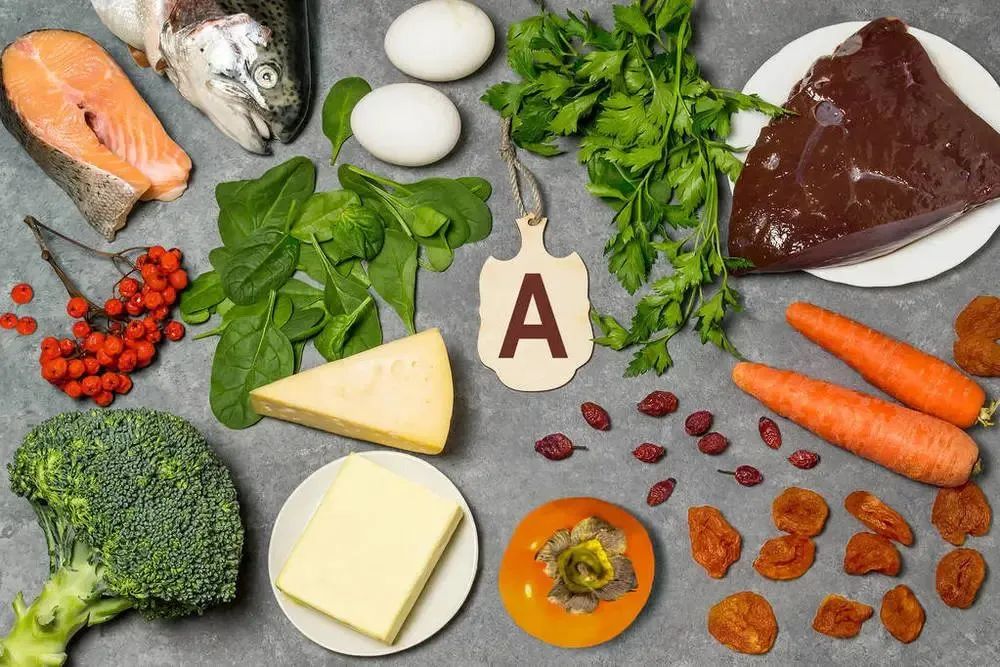
Vitamin A is a fat-soluble vitamin. Vitamin A can maintain the normal growth, differentiation, proliferation and keratinization of skin cells. It is rich in various vegetables and fruits, and is also found in high levels in animal livers.
Common forms of vitamins include retinoic acid, retinoic aldehyde, retinoic alcohol and retinoic acid lipids. The latter three are derived from the step-by-step hydrolysis of retinoic acid. Since vitamin A was first used to treat eye diseases, its class of substances is also called retinoic acid, retinal, retinol and retinol lipids.
Retinol, retinal and their derivatives are commonly used in skin care products. However, they cannot act directly on human skin. They must be converted into retinoic acid (retinoic acid) by human enzymes to play a role in skin care.
Efficacy and effects
(1) Whitening And Clearing Speckles Raw Materials
Retinol can inhibit melanin synthesis by downregulating the expression of tyrosinase and tyrosinase-related protein genes in B16 melanoma cells. It also has anti-keratinization and exfoliation properties, thereby achieving the effect of evenly brightening skin tone. However, compared with traditional whitening agents, retinol is still inferior. It is a "surprise" in skin care experience and is not recommended as the main whitening agent!
(2) Anti-aging And Anti-wrinkle Raw Materials, and skin elasticity tightening
This effect should be the most recognized and advertised effect in the market.
Retinol can act as a messenger to promote the proliferation of keratinocytes in the basal layer of the epidermis; it can stimulate the synthesis of type I and type III procollagen on fibroblasts; at the same time, it can suppress the activity of MMP1 and MMP9, two matrix metalloproteinases, which are over-stimulated by ultraviolet rays, reduce the damage to collagen fibers, prevent photoaging, and prevent the appearance of wrinkles and sagging.
To put it simply, it not only improves true wrinkles and enhances skin firmness, but is also one of the few raw materials that can significantly improve aging problems caused by photodamage. It is truly an effective and cost-effective choice!

(3) Acne-removing effect
This effect is rarely claimed by the market. The main reason is that compared with acids, anti-inflammatory and antibacterial ingredients, it does not have an immediate effect. Compared with anti-aging and whitening products, the price is also relatively low for people who claim to remove acne. Therefore, there are very few brands and factories on the market that directly use it to make acne-removing products.
From a medical perspective, the clinical application of retinoic acid drugs in dermatology is called the "third milestone" in dermatological therapeutics. Whether it is oral isotretinoin or topical retinoic acid ointment, it is a first-line drug for the treatment of common skin diseases such as acne, psoriasis, and lichen planus.
Studies have found that retinoic acid receptors belong to the nuclear receptor superfamily, which also includes glucocorticoid receptors, thyroid receptors, vitamin D3 receptors, and orphan receptors (i.e. receptors whose ligands have not yet been discovered). These nuclear receptors can directly regulate the transcription process of genes, forming "retinoic acid response units" and playing an important role in the interaction with other hormone signaling systems.
Therefore, in skin care, retinol, retinal and its derivatives that can be converted into retinoic acid are actually treasure ingredients for people with oily and acne-prone skin!
(4) Thickening the epidermis and tightening the stratum corneum
In fact, I was a little surprised to learn about this effect. People who have used topical retinol or taken isotretinoin orally know that they will experience dryness, peeling, and even cheilitis, and will feel that their skin is sensitive and prone to sunburn. Instinctively, they believe that its exfoliation and anti-keratinization effects will make the skin barrier thinner if used for a long time.
Studies have shown that topical 0.1% retinol can stimulate the expression of Ki-67, increase the deposition of glycosaminoglycans in the epidermis, promote keratinocyte proliferation, and significantly increase the epidermal thickness of skin explants.
This may also be the claim of early functional skin care products that use C in the morning and A in the evening to break and rebuild, and to experience tolerance and sensitivity and rebuild the skin's "thick skin".
In recent years, the craze for retinol has also caused some skin problems. From the user's perspective, sensitive skin needs to do enough homework or have professional guidance to upgrade to retinol products. It is not recommended for novices to blindly use strong drugs. For brands and engineers, how to tame the shortcomings of retinol and develop anti-aging products that are more suitable for Asian skin is worth continuing to study.
Disadvantages:
(1) Irritation problems, mainly manifested in sensitive problems such as peeling, burning and itching, often need to establish tolerance
(2) It is afraid of light and easily inactivated. The esterified derivatives have problems with conversion and bioavailability, and their effectiveness is questioned
(3) Side effects, manifested as teratogenicity and embryotoxicity, and pregnant women should not use it
Application suggestions:
1 Retinol + HPR can synergistically enhance the anti-wrinkle effect. Bird Chuangyan came to this conclusion in the screening of raw materials. Through compounding, 1+1 is greater than 2, which not only reduces the irritation of single retinol, but also is more cost-effective than using HPR alone.
2 Retinol can be dissolved in fatty acids or oils and is sensitive to light, heat, and oxygen. It is recommended to avoid the presence of oxygen during processing and storage, and it needs to be added at low temperature.
3 To protect the activity stability, chelating agents, antioxidants, or ultraviolet absorbers can be added for protection
4 The pH range is wide, 4.5-8, the raw material compatibility is good, and it has a mutually reinforcing effect when used together with vitamin B ingredients.