

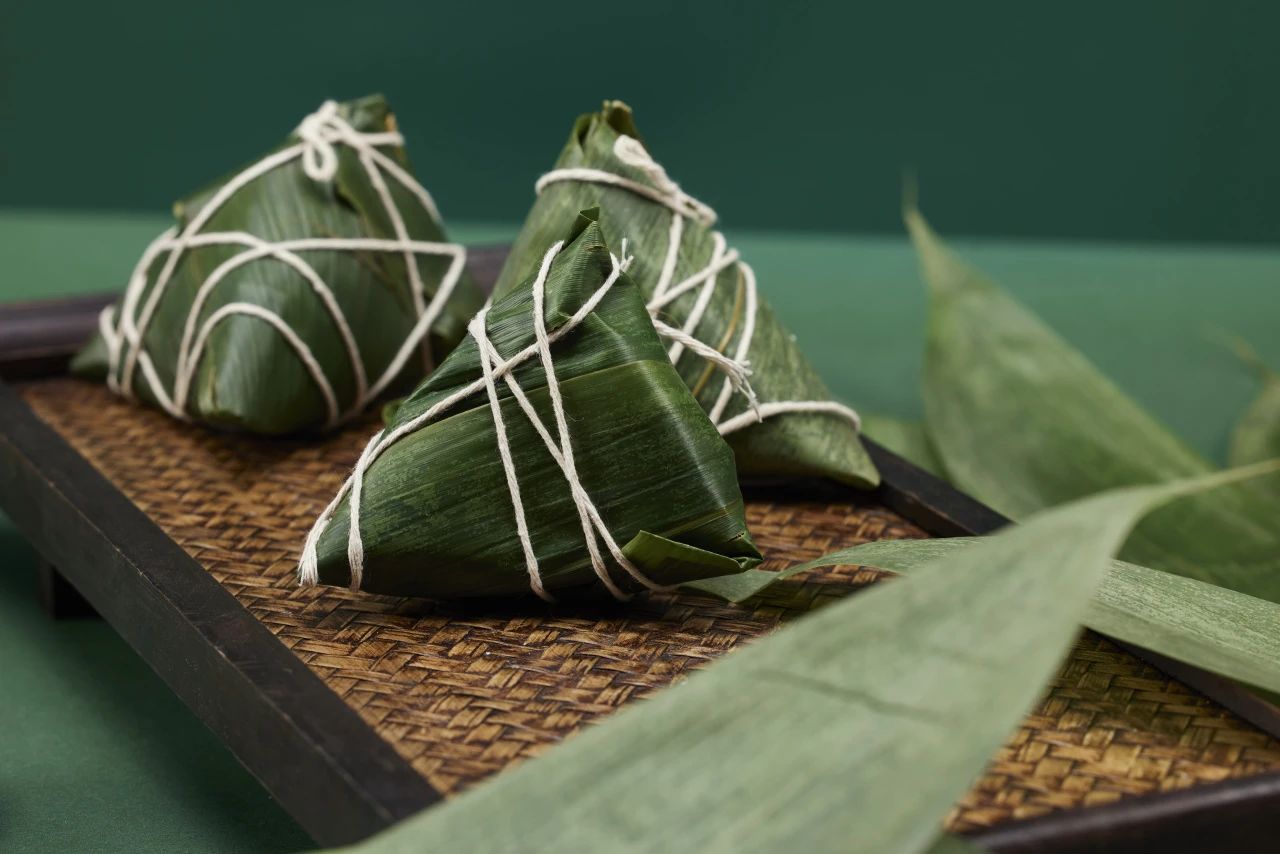
The Dragon Boat Festival is coming soon, and it is time to taste zongzi again. When the sweet fragrance of glutinous rice and the fragrance of zongzi leaves interweave, few people will realize the infinite value of this leaf. In fact, zongzi leaves are not only the carrier of traditional food, but also a natural material rich in bioactive substances. Its application value is constantly expanding with modern scientific research.
Chemical composition and natural functional properties of bamboo leaves
Flavonoids: natural antibacterial ingredients
Studies have shown that the total flavonoid content in bamboo leaves can reach 2.5%-3.8%, mainly including quercetin, kaempferol and other ingredients. These substances achieve broad-spectrum antibacterial effects by destroying the cell membrane structure of microorganisms and inhibiting enzyme activity. Experimental data show that the inhibition rates of bamboo leaf extract on Escherichia coli and Staphylococcus aureus are 76.3% and 82.1% respectively, and the inhibition effect on fungi such as Aspergillus flavus is significantly better than that of chemical preservatives such as potassium sorbate. This natural antibacterial property makes bamboo leaves an ideal food contact material, which can effectively extend the shelf life of food.
Polysaccharide system: synergy of antioxidant and film-forming properties
The polysaccharide of zongzi leaves is mainly composed of arabinogalactan, and its molecular weight distribution shows that it has a unique branched structure. This structure gives the polysaccharide dual functions: on the one hand, the active groups such as hydroxyl and carboxyl contained in it can chelate metal ions, and the ability to remove DPPH free radicals reaches 68.2μmol TE/g, exerting an antioxidant effect; on the other hand, the polysaccharide solution forms a dense network structure during the drying process. This natural film-forming property makes it suitable as an edible packaging coating. Experiments have shown that it can reduce the lipid oxidation rate of meat products by 41.3%.
Volatile components: flavor regulation and preservation effect
Headspace solid phase microextraction-gas chromatography-mass spectrometry analysis shows that zongzi leaf volatile oil contains p-vinylphenol (accounting for 42.7%), β-caryophyllene (18.5%) and other components. These substances not only give zongzi a unique fragrance, but also have a practical preservation function: p-vinylphenol can inhibit the activity of lipoxygenase, and β-caryophyllene can achieve antibacterial effect by interfering with microbial signal transduction. This dual property of "flavor-function" makes rice dumplings leaves a natural food preservative and flavor carrier.
Innovative application of Zongye in food packaging
With the deepening of the concept of green packaging, the application of Zongye has broken through the traditional scope and formed three major technical paths:
Direct packaging materials
Physical barrier strengthening: Indigo leaf fibers are arranged in a three-dimensional network, with a tensile strength of 12.6MPa and moderate air permeability, which can adjust the microenvironment in the package. Studies have shown that the growth rate of volatile basic nitrogen in bacon wrapped in Zongye is 58% slower than that of PE packaging.
Intelligent response packaging: By regulating the drying process, the Zongye leaves can maintain a moisture content of 12%-15%. At this time, the packaging is flexible and can inhibit the reproduction of microorganisms by regulating water activity. This "active packaging" extends the shelf life of Zongzi at room temperature to 45 days.
Development of edible coatings
Using ultrasound-assisted extraction technology, polysaccharide fragments with a molecular weight of less than 5kDa can be obtained from Zongye leaves. The polysaccharide solution was sprayed on the surface of the fruit at a concentration of 2%, forming a transparent film with a thickness of 8-12μm, which significantly inhibited the weight loss rate of strawberries (reduced by 63.7%) and the loss of vitamin C (the retention rate increased to 89.4%). More importantly, the coating was completely degraded within 6 hours in simulated gastrointestinal fluid, meeting the safety standards for edible packaging.
Preparation of antibacterial fibers
Through electrospinning technology, the flavonoid extract of Zongzi leaves was blended with polylactic acid to produce a nanofiber membrane. The inhibition zone diameter of this material for Listeria is 18.2mm, and the fiber diameter can be controlled at 200-400nm, meeting the requirements of high barrier packaging. This type of bio-based antibacterial film shows great potential in the field of ready-to-eat food packaging.

Functional application of Zongye extract
Modern separation technology is transforming Zongye into high value-added food additives, forming three major application directions:
Natural antioxidant raw material
Supercritical CO₂ extraction can obtain an extract containing 65% flavonoids from Zongye, and its ORAC value reaches 3.2μmol TE/g, which is equivalent to 1.8 times the same quality of vitamin C. In the vegetable oil system, adding 0.05% of this extract can extend the induction period by 2.3 times, which is better than BHT.
Flavor enhancer
Molecular distillation technology can enrich p-vinylphenol in Zongye to obtain essential oil products with 5 times higher aroma intensity. When used in meat products, this essential oil not only provides a characteristic fragrance, but also reduces the production of rancid taste by inhibiting fat oxidation, which can increase the product sensory score by 15%-20%.
Functional food base
Enzymatic hydrolysis technology can convert Zongye polysaccharides into functional factors with a molecular weight of 10-50kDa. Animal experiments have confirmed that this polysaccharide can regulate the structure of intestinal flora, increase the abundance of bifidobacteria by 37.6%, and reduce serum MDA levels by 28.9%, showing dual functions of antioxidant and prebiotics.
From the Dragon Boat Festival table to modern food factories, zongzi leaves are undergoing a transformation from traditional packaging materials to high-tech raw materials. This touch of green not only wraps up the thousand-year-old delicacy, but also carries human awe of natural wisdom and exploration of modern technology. When we taste zongzi, perhaps we should pay deeper respect to this green coat, which is not only a carrier of culture, but also a green bridge to future food technology.